网页
综合
更新时间 2026-11-14 05:31:05
The Situation Report \ Anthropic
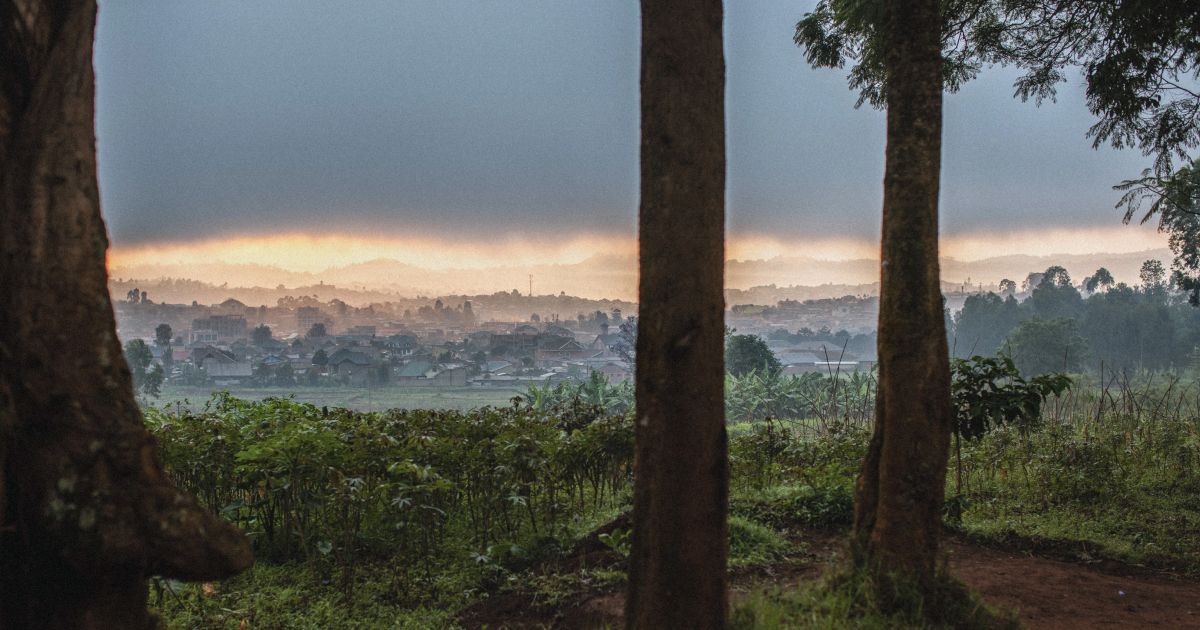
In Butembo, in the eastern part of the Democratic Republic of the Congo, a community health worker goes door to door with a notebook, recording fevers, recoveries, and deaths. She texts her daily notes to a zone manager on WhatsApp. Her counts become data for the situation report that responders use to determine where Ebola is heading and where to send help. Until recently, building that report kept teams working late into the night.
A rare strain of Ebola, with no confirmed vaccine, is spreading through the east of the Democratic Republic of Congo. World health organizations are using Claude to move as fast as possible to combat it.
Photography by Elijah Muweza, Hugh Kinsella Cunningham, Moses Sawasawa, and Nichole Sobiecki/VII/Redux
Democratic Republic of Congo — 19 September 2026
In the last 24 hours. 58 new confirmed cases (Ituri 38, North Kivu 14, Haut-Uélé 5, Tshopo 1) and 23 deaths. Of those deaths, 13 were in the community and 10 in treatment centres. 15 patients recovered.
Totals since the outbreak began. 7,672 confirmed cases and 3,699 deaths, a fatality rate of 48.2%. 886 patients are in isolation and 1,879 have recovered.
Spread. 7 provinces and 63 of 167 health zones. No new zone was affected that day. Ituri is the epicentre, with 77.1% of all cases.
The outbreak is Bundibugyo ebolavirus. It was confirmed in May, and an emergency of international concern was declared on 17 May.
Occupancy: North Kivu's treatment beds are almost full (94.7% occupancy, none left in Butembo or Katwa).
SSince May, teams on the ground in the Democratic Republic of the Congo (DRC) have been combating a rare strain of Ebolavirus called Bundibugyo (BDBV). Every day, relais communautaires knock on doors of homes, offer counsel, learn of recoveries and deaths, and refer anyone with suspicious symptoms to get care.
In an outbreak like this one, a health worker's notebook is often the first and most complete record of when a person got sick, who they touch, and where they went before they knew they were infected. In the BDBV outbreak, almost half of the nearly 8,000 confirmed cases have died. How quickly someone is found—before their condition turns critical and while they can still be treated—often determines whether they survive.
Once a vaccine becomes available, that same contact information will tell responders exactly where it needs to go. A faster, more accurate picture of who was exposed means people can be found and protected before they ever fall ill. But the speed of this response is limited by how quickly the data can be passed along the chain from the notebooks of health workers, to the labs confirming diagnoses, and to the ministries and funders deciding where resources go next.
Health facilities send case information to their districts, often over WhatsApp, and send biological samples to local labs for sequencing. Each district puts case information onto PowerPoint slides and sends it on to the outbreak coordination center. At the provincial health ministry, the staff compiling the reports work late nights pulling together this information into slide decks. These decks turn into the published situation report, or sitrep.
The creation of sitreps, and the greater outbreak response, has recently started to look different in eastern DRC, thanks to a partnership convened by the Coalition for Epidemic Preparedness Innovations (CEPI) with, among others, the WHO Regional Office for Africa (WHO AFRO) and the Institut National de Recherche Biomédicale (INRB). These organizations have been working with Anthropic's Beneficial Deployments and Applied AI teams to use Claude to analyze community health workers’ field data, to systematically monitor and review research evidence, and to use our scientific workbench.
“I have fought this virus for fifty years. The tools have changed completely, but the rule has not: you beat Ebola by knowing where it is today, not where it was last week.”
The emergencies hub of WHO AFRO is headquartered in Dakar, Senegal. The response team handles about a hundred public health events a year, often deploying on missions to affected regions to gather data and work on processes.
Tendai Muza works on data systems and analytics at WHO AFRO. With his colleagues Tamayi Mlanda and Gianni-Ferrari Donkor Muza, he built a Claude skill to accelerate the sitrep process. With the skill, Claude knows to pull the case and lab numbers out of each health zone’s PowerPoint deck, check them against the previous day’s report, flag any change in the trend (and explain what might be going on with it), and then summarize the districts’ reports. A sitrep that used to take all day to put together can now take under an hour.
For the data teams, in addition to streamlining the sitrep process with Claude, they are also using it for analysis and disease modeling. Paul Ouma of the WHO AFRO team said, “Previously we couldn't even start thinking of which disease model might be better. We could only run with one, because of time constraints.” Now they can run multiple models at a time with Claude and build forecasts to help, for example, logistics staff decide where treatment centers should be built.
There is currently no approved vaccine for BDBV, but there is a vaccine, Ervebo, for the Zaire strain. When BDBV emerged, CEPI invited proposals to advance potential vaccine candidates and related vaccine science. Polina Brangel, R&D Data Innovation Lead at CEPI told us, "Claude does not decide which cohorts of serological samples should be analyzed to generate evidence on Ervebo's potential cross-reactivity against BDBV — that remains a scientific judgement made by experts.” What Claude currently does is “organize complex, multi-factor data in a way that allows the human eye to compare across a wide range of proposals and draw conclusions within a much shorter timeframe.”
CEPI used Claude to build a dashboard that helped more quickly and robustly track the actions and work needed to be done by teams to advance v
本页为82搜索生成的网页快照,内容来自站内索引;演示数据的原文链接仅作示例。