网页
综合
更新时间 2026-11-13 19:21:40
Session 2: Methane Leaks Hackathon | Climate Action Hands-On: Harnessing Science with Communities to Cut Carbon | MIT OpenCourseWare
Objective: Participants get practical background on methane leaks, and initial hands-on experience with the tools for detecting leaks, measuring the volume of gas released from a leak, and tracking and visualizing leaks.
Session structure: Four-hour session in a makerspace, split into three parts.
Instructional Approach:
A brief lecture and discussion about methane leaks, building on Session 1, to orient all hackathon participants to the nature of the challenge.
Instructors: Nathan Phillips (Boston University), Audrey Schulman (HEET)
Explore tangible, specific solutions to the methane leak measurement problem, considering practical restrictions and desired results.
The following photos and video illustrate the nature of the discussions and the process in one of the hackathon groups.
Instructors: Audrey Schulman (HEET), Zeyneb Magavi (Mothers Out Front)
Note: In this year’s class, all the participants wanted to work on the Tools and Methods track; no takers for this data analysis and visualization track. For future offerings, be sure to invest in specific outreach to the expertise we need to have involved (here, the coding / hacking community). Following are suggestions on what this track might have covered, had it actually occured.
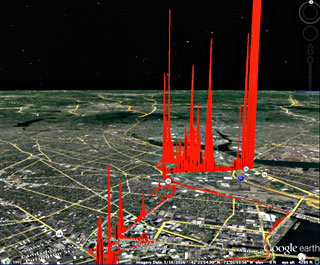
We have mounds of data on gas leaks, and would like to make more effective use of it. Data sources include:
What projects could be done? Some possible directions: Database building, app development, data collection equipment design / construction, data visualization, GIS data processing and Google Earth maps, animation / infographic design for public campaigns, emissions modeling…
Some things we might want to learn from data:
No direct documentation is available from this wrapup and synthesis segment.
Throughout 2017, Mothers Out Front and the Gas Leaks Allies coalition continued on some of the concepts explored in this hackathon. In October 2017, they announced successful results with a test methodology to measure gas leak volume using the FLUXBar tool.
This video is from HEET (Home Energy Efficiency Team) on YouTube and is not covered by our Creative Commons license.
See the Gas Leaks Allies’ “Common Ground, Uncommon Partners,” featuring video of their October 3, 2017 symposium at MIT.
News coverage: Craig LeMoult. “In An Unlikely Partnership, Local Environmentalists And Utilities Work Together To Reduce Gas Leaks.” WGBH News, November 29, 2017.
访问原文
返回搜索
https://ocw.mit.edu/courses/res-env-001-climate-action-hands-on-harnessing-science-with-communities-to-cut-carbon-january-iap-2017/pages/session-2-methane-leaks-hackathon/
本页为82搜索生成的网页快照,内容来自站内索引;演示数据的原文链接仅作示例。