网页
综合
更新时间 2026-10-29 07:30:00
How Darkroom is building the next-generation of mobile first photography tools · Sketch Blog
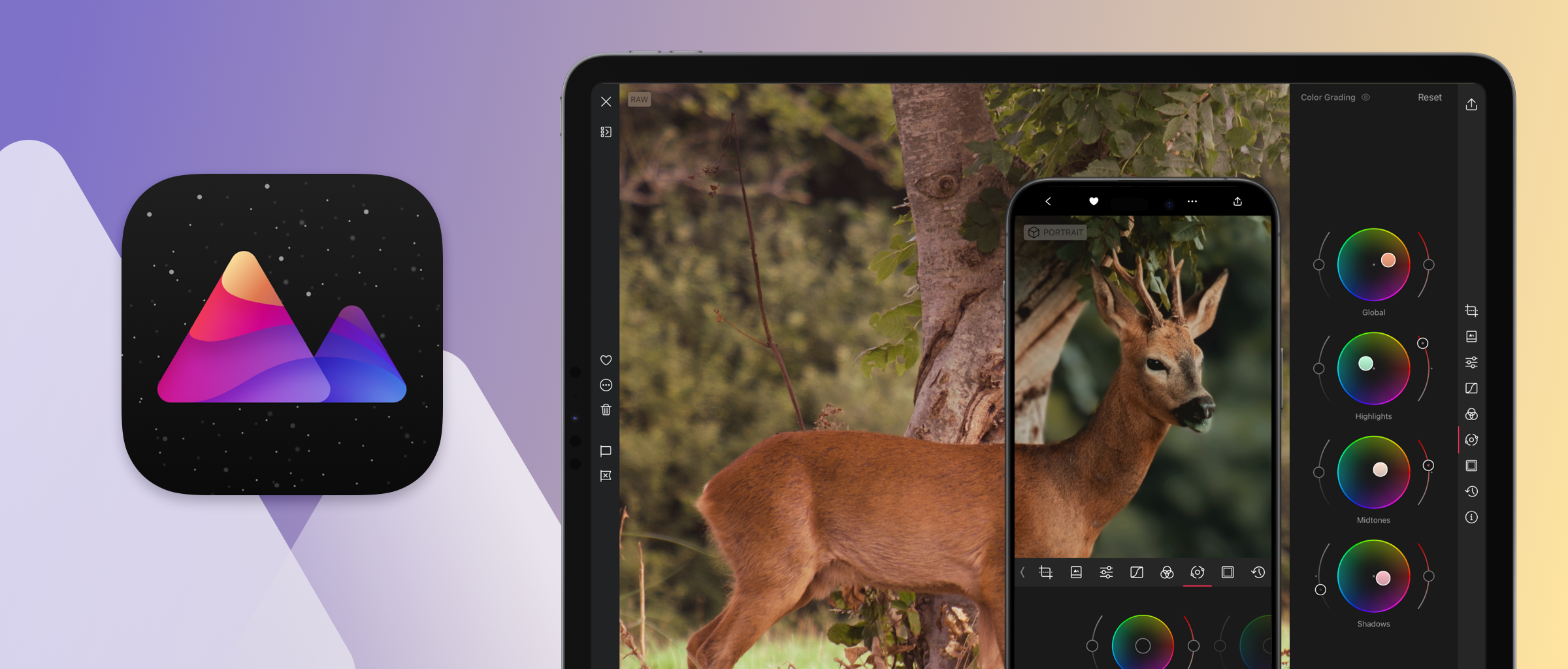
Darkroom, an app developed by a team of former Facebook colleagues and experienced app developers, is bringing both amateur and pro users an intuitive editing experience — expanding from iPhone to iPad, Mac, and now Vision Pro. We had the chance to sit down with Jasper Hauser, three-time Apple Design Award winner, co-founder and product designer at Darkroom, to explore the app’s journey, the design philosophy behind it, and how they use Sketch to bring their ideas to life.
Darkroom was a vision from my co-founder Majd. As former colleagues and close friends from our days at Facebook, Majdʼs passion for mobile photo editing sparked the initial idea. He began building Darkroom for the iPhone, designing the app with a split interface: the top half for viewing photos, particularly with Instagram in mind, and the bottom half for accessing powerful editing tools. This setup made it easy for users to create their own presets effortlessly. Today, we’re a small team of four core members: Majd, Joe, Jeff, and myself. Over the years, we’ve had additional full and part-time contributors, and many others have lent their talents to the project in different ways.
Since its launch in 2015, Darkroom has seen several key developments: expanding from iPhone to iPad in 2018, making our debut on the Mac in 2020, and introducing advanced masking tools in 2022. Our dedication to quality and user experience has been recognized with an Apple Design Award, and from those early days to now, our goal has always been to empower users to bring their creative visions to life in the easiest and most efficient way.
The very first designs were prototype iPhone builds created by Majd. From the start, his idea was to make an intuitive and efficient mobile workflow by counting the taps needed to edit a photo — and to provide tools like curves and color on mobile (for the first time) so people could create preset looks that were hard or impossible to do before.
From my perspective, the real “breakthrough” so to speak, was the editing interface layout. Majd had come up with a simple but unique layout where there was space for a square photo at the top and the rest of the space below for tools. Remember the good old square Instagram and tiny iPhone 5 days? This setup allowed for great ergonomics and the ability to navigate and basically edit with just your thumb. Swiping was also used to dismiss the photo and navigate to previous and next shots.
All I really did in those early days was applaud and confirm his intuition that this was a solid approach. Once I officially joined as product designer in 2016, I started contributing more: optimizing workflows, making them even more intuitive and easy to use, growing the business, and expanding to other platforms.
One of the key aspects of mine and Majdʼs approach to design is the strong overlap in our understanding and skills in design, photography, and engineering. Even though Majd is my technical co-founder, heʼs equally a design thinker and partner. We work closely on product and interaction design and expect everybody on the team to be able to have loosely held strong opinions on these subjects. I often lead market research, create design mockups, and build prototypes to facilitate discussions and implementation planning. We do our homework before kicking off, iterate several times, and I keep detailed notes to track our progress. Additionally, I create prototypes with video walkthroughs to showcase workflows and use cases, which helps generate valuable feedback from the team.
Once we have a clear understanding of the scope, phasing, and challenges, we prefer to start building sooner rather than later.
Once we have a clear understanding of the scope, phasing, and challenges, we prefer to start building sooner rather than later. This helps us uncover real-world implementation complexities and address any remaining questions about the product and design. To us, the second half of designing a product happens when we start building it. During this phase, we conduct detailed product reviews, discuss ideas freely, and iterate while having the product in hand. We invest a lot of time in moving from prototype to feature-complete, continuously refining and improving along the way. For larger features, we also tend to invite some outside opinions to weigh in on what we are building.
Winning the ADA wasnʼt on my radar, especially since Iʼd already experienced the joy of winning Apple Design Awards with my previous ventures at Made by Sofa, Versions and Checkout. However, seeing Majdʼs enthusiasm and our teamʼs dedication, winning the ADA became a major testament to our commitment to excellence.
Iʼve learnt that listening to users and prioritizing their needs is unsurprisingly impactful :) Darkroomʼs success is built on this principle: constantly iterating based on feedback to create a great user experience. Staying ahead in tech means continually evolving, and with Darkroom weʼve embraced new platforms, technologies, and trends, ensuring we remain relevant while maintaining our core simplicity.
Whether itʼs performance, stability, or user support, maintaining high standards has built trust and reliability.
Weʼve never compromised on quality. Whether itʼs performance, stability, or user support, maintaining high standards has built trust and reliability. Perseverance has also been key — not giving up in the face of challenges and maintaining a constant effort has driven our success and growth over time.
Expanding Darkroom across platforms was a strategic move to meet our users wherever they are and grow our business. Today, iPhone still accounts for about half of users and iPad and Mac now equally account for the other half. Initially, on the iPhone, we focused on optimizing for taps and swipes, creating a streamlined, touch-based interface. The transition to the iPad allowed us to rethink the user experience entirely. We leveraged the larger screen to introduce a more comprehensive workspac
本页为82搜索生成的网页快照,内容来自站内索引;演示数据的原文链接仅作示例。