网页
综合
更新时间 2026-11-15 00:03:00
Federico Rossi
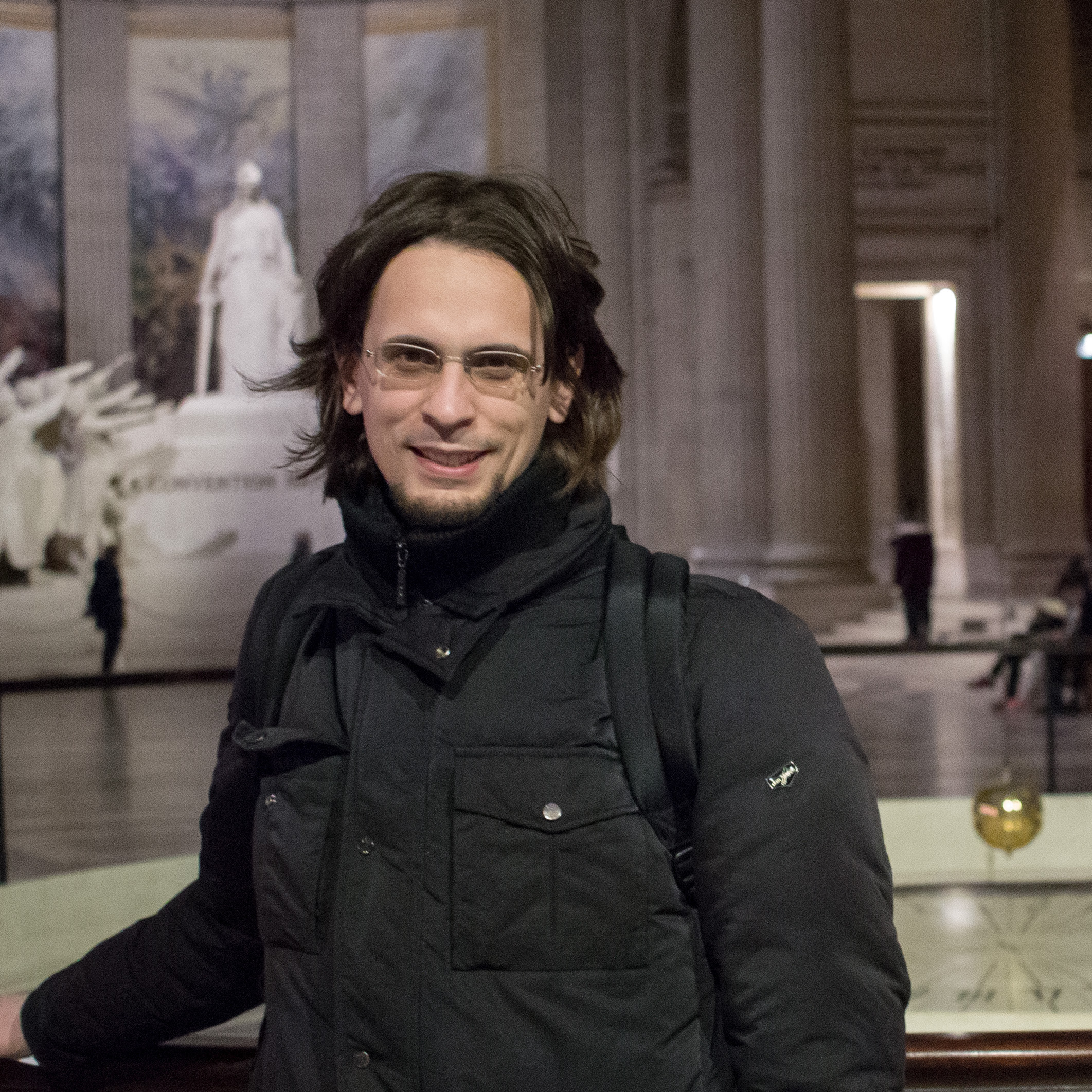
I am a Robotics Technologist with the Maritime and Multi-Agent Autonomy Group (347N) in the Robotics Section of the NASA Jet Propulsion Laboratory.
My current research focuses on optimal control and decision-making in multi-agent robotic systems, with applications to (i) swarms of unmanned aerial vehicles and surface vessels for patrolling and exploration and (ii) coordination of fleets of self-driving cars for autonomous mobility-on-demand in urban environments.
I earned a Ph.D. in Aeronautics and Astronautics at Stanford University under the guidance of Prof. Marco Pavone, director of the Autonomous Systems Laboratory. I received a M.Sc. in Space Engineering from Politecnico di Milano, a M.Sc. in Aerospace Engineering from Politecnico di Torino and the Diploma from the Alta Scuola Politecnica in 2013. In 2011-2012, I spent seven months at SUPAERO as an exchange student (Admis Sur Titre). Prior to that, I received my B.Sc. in Aerospace Engineering from Politecnico di Milano in 2010.
When not in the lab, I enjoy astronomy, photography and reading.
Self-driving cars can greatly increase safety of our roads and enhance mobility for those unable or unwilling to drive. Today, private vehicles spend more than 90% of their lives idle, parked either at home or at work. With self-driving cars, this could change drastically: shared autonomous vehicles, part of an Autonomous Mobility-on-Demand (AMoD) system, could operate like taxis, driving from a passenger’s destination to the next passenger’s departure location. Fewer vehicles and, with no need to park, more room for homes and businesses!
But how should the passengers be assigned to the vehicles? Can we anticipate passenger demand and preemptively rebalance vehicles across a city to decrease waiting times? Can we ensure that self-driving vehicles won’t increase traffic congestion? If the vehicles are electric, when should we charge their batteries to make sure they are on the road when they are needed? Will thousands of vehicles recharging at once destabilize the power grid? How should these sistems interact with existing infrastructure, such as the subway and commuter trains? Our research strives to answer these questions.
How can networks of hundreds or thousands of robots make decisions quickly, efficiently and robustly? How much time, battery power and wireless bandwidth is required to reach an agreement in a robotic swarm?
Our research explores the fundamental performance limitations of distributed consensus and the tradeoffs between time complexity, message and byte complexity (both proxies to battery usage), bandwidth complexity and robustness of algorithms for decentralized decision-making. Applications include leader election, data fusion and distributed optimization in robotic networks.
In collaboration with Universidad San Francisco de Quito, we worked on the design, construction and deployment of a swarm of UAVs to protect sharks in the Galapagos Marine Reserve from illegal poaching.
Our contribution included design of deployment algorithms for dynamic coverage and hardware and software design of the communication subsystem to robustly transmit images and videos in real-time from the planes to a ground station. The project is currently in a hiatus (but sharks in the Galapagos are protected by a new marine sanctuary!).
Abstract: Although observations are vital for state estimation in nearly all robot systems, there are numerous real-world scenarios where one cannot practically assume that these arrive in a reliable and steady stream. This paper examines planning for Markov decision processes when, owing to stochastic elisions, state information is only available intermittently. We model streams of estimates via a Bernoulli arrival process, developing foundational theory needed to handle planning under such settings. After relating multiple distinct (non-finitary) solution concepts and furnishing pertinent Bellman relations, we prove the exponential rate of convergence of successive truncation approximations. Next, for ‘driftless’ MDPs that allow an agent to stay in place with no reward or penalty, we offer bounds based upon truncations, where different treatments of the pruned tail’s probability mass yield directly interpretable upper- and lower-bounds. Harnessing this combination, we obtain a bounding-based algorithm—the first known solution method for this class of problem. The algorithm has the useful property that it can detect when its output obtains the global optimum. Through the use of small-scale simulation scenarios we demonstrate that there are circumstances in which finite policies are precisely optimal, and illustrate that the approach is able to successfully identify such cases in practice.
Abstract: Cooperative Autonomous Distributed Robotic Exploration (CADRE) mission uses a team of lunar rovers that share world-model data over one mesh radio, on an embedded flight computer, between the power cuts a hardware timer imposes. The onboard plan schedules bulk synchronization before the team-planning task that depends on it, and both must finish inside a rover’s active interval. We present MoonDB, the shared world-model data layer built for those constraints. MoonDB combines a persistent database on each agent, commanded transfers under per-class policies, and map reconstruction from stored patches and poses. We derive six requirements from CADRE’s concept of operations. We give each an acceptance metric and read the onboard databases archived during flight qualification against them. We audit four boundaries in a record’s path to the team plan: the sender selects it, the receiver acknowledges it, the receiver’s store holds it, and it is in the planning store when the team planner reads. In the 60 sessions where a commanded synchronization completed, the aggregator held 100.00% of the records marked and eligible before the pass. Of 48,332 record–destination pairs whose sender and receiver stores are both archived, 99.64% we
本页为82搜索生成的网页快照,内容来自站内索引;演示数据的原文链接仅作示例。